Don’t feed the bears

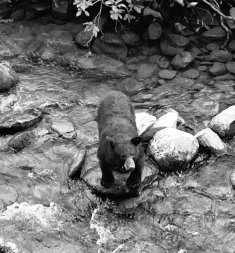
A new law will make something that seems obvious illegal as the General Assembly has passed a measure to make feeding black bears illegal in the state of Tennessee.
The new law not only brings a punishment for intentionally feeding bears but it also adds a punishment for those who leave out trash or garbage that attracts bears.
The new law was brought up to address the growing number of human and bear interactions, mainly in the Great Smoky Mountain area and tourist destinations such as Gatlinburg. However, the law is in force through the state.
“SB-2597 is a critical step towards reducing human-bear conflicts, enhancing public safety and supporting humane wildlife management,” the framers of the new law wrote. “Feeding bears habituates them to humans, often leading to their deaths. This bill strengthens enforcement to protect our state’s beautiful, intelligent black bears, particularly near high tourism areas surrounding the Great Smoky Mountains National Park.”
The new law sets forth fines for the misdemeanor. Feeding bears is already punishable by fine and potential incarceration within the Smoky Mountains National Park as enforced by federal authorities.
“Notwithstanding another law to the contrary, it is an offense to feed black bears within the confines of an area for which the commission has proclaimed that feeding black bears is prohibited,” the new law reads. “Knowingly feeding a black bear in violation of subsection (a) is a Class B misdemeanor, punishable by a fine of no less than two hundred fifty dollars ($250), before the imposition of any additional court costs or fees. Unknowingly feeding a black bear in violation of subsection, that occurs as a result of knowingly leaving food or garbage unsecured and otherwise accessible to black bears, is a Class B misdemeanor, punishable by: For a first offense, a written warning only; or For a second or subsequent offense, a fine of no less than two hundred fifty dollars ($250), before the imposition of any additional court costs or “fees.
This act takes effect July 1, 2026