We can do better

Recently you had an opportunity to read about Samantha, a resident of Shepherd’s House in 2023, and how she credits the shelter for homeless women and children for turning her life around.
Shepherd’s House has produced many other personal success stories since its founding 27 years ago.
Betty, a nurse for many years, had to retire early for health issues. The health issues were so expensive she ended up without a home and transitioned to Shepherd’s House. Now Betty is living in her own apartment, has worked through most of her medical bills and successfully completed not only the life skills courses offered at Shepherd’s House but also the Bridges over Poverty program.
Jennifer, a newly recovering addict when she arrived at Shepherd’s House, now returns to the home regularly to speak with and encourage the ladies well as the ladies at the Bedford County jail as part of her ministry.
Neacie came to Shepherd’s House with an addiction. She is now on her own, raising her baby and working full time.
According to Shepherd’s House Executive Director Penny Cooper, the home was founded in 1999 after an unhoused man in Tullahoma was found frozen to death. A group of citizens decided this was completely unacceptable and founded Citizens for Homeless Relief. That effort later transitioned to Shepherd’s House after a home was donated on First Avenue adjacent to Trinity Lutheran Church.
Shepherd’s House is a women’s and children’s transitional home to assist residents to get back on their feet.
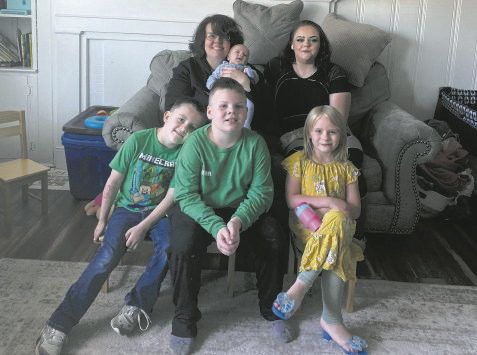
The home can house up to 12 individuals. If the weather dips below 32 degrees, three can sleep in the living room but must leave the next morning. Currently there are six women and five children with a baby on the way living in the home. Most residents stay for six months but if they are following the program and doing what they can do to find housing, but if housing is not available, they can stay up to a year.
“Many women arrive at Shepherd’s House broken, scared and confused. We have had residents arrive as a result of domestic violence, recently released from recovery facilities or jail but most of the residents are local, working people who cannot afford rent,” said Cooper.
“These are the hard working folks that wait on tables, the face you see at the restaurant drive up windows, factory and the retail workers who just do not make enough to afford the high cost of rent every month. They are your neighbors who are one illness, one car accident or one catastrophe away from being homeless. They are here, they are important and they are part of our community.”
Life at Shepherd’s House is very structured for the women and children residents. Most residents are up early with beds made and their rooms cleaned. Residents not already at work gather around the table for breakfast, which each cooks independently, and talk about their plans. Residents not working take Life Skill classes and are encouraged to enroll in Bridges Over Poverty and Celebrate Recovery. There are assigned chores during the day along with Bible studies and occasionally craft days. The Director meets with each individual at least monthly to set goals and check progress.
Each lady has an assigned night to cook and residents gather around the table at 6 to eat and chat about their day. The children do their homework and play in the living room while the adults watch a little TV. Everyone is usually in bed by 9 or 10. Shepherd’s House truly does function very much like a family according to Mrs. Cooper.
Those who work are required to save 75% of their income to provide a good start for when they transition outside Shepherd’s House. There is also a ‘home to home’ program which provides everything they need when residents start their journey into independence including housewares, furniture and bedding.
Since Cooper became director fifteen months ago there has never been a time without a wait list. Currently there is a wait list of 46 women and 28 children. The average wait to get into Shepherd’s House is three months.
When Shepherd’s House is at capacity and a person is seeking shelter, they are offered a shower and something to eat. They are then offered a sleeping bag and tent and then they sleep outside or in their car. If this happens in January through March, they can go, often walking, to a warming shelter in town.
“We always need the basics including food, especially meat, and cleaning and hygiene supplies,” said Cooper. “But what we really need is a larger shelter. We have $300,000 saved but that is a third if what we need to build a shelter which requires special fire and safety standards.”
“We need more room for women and children so no child has to sleep in a tent or a car or couch surf with their parents. But what we really need is a Shepherd’s House for families. Can you imagine moving to Shepherd’s House so your children have a roof over their heads but leaving your husband to sleep in a car or tent.”
Mrs. Cooper offers that at one point she could have been a Shepherd’s House resident. “I lost my eight year old daughter in a car accident 20 years ago. A year later my husband of 20 years left me. I fell apart and if it had not been for my church family and family I would have been homeless. They encouraged me, taught me and helped me get back on my feet. Being Shepherd’s House director is just me paying forward what I was blessed enough to have.”
“We need to do better. We need to care more about every single citizen in our town.”
Lane Curlee can be reached at 5810360 or lcurlee@lighttube.net.